
Author: Blog Team
-

Engaging students by fostering critical thinking – but how?
Memorable engagement happens when students are motivated to think critically. Dr Tam Duc Dinh shares five practices and six dimensions they use in case-based tutorials to build a no-fear culture and help students reason, question, and use evidence.
-
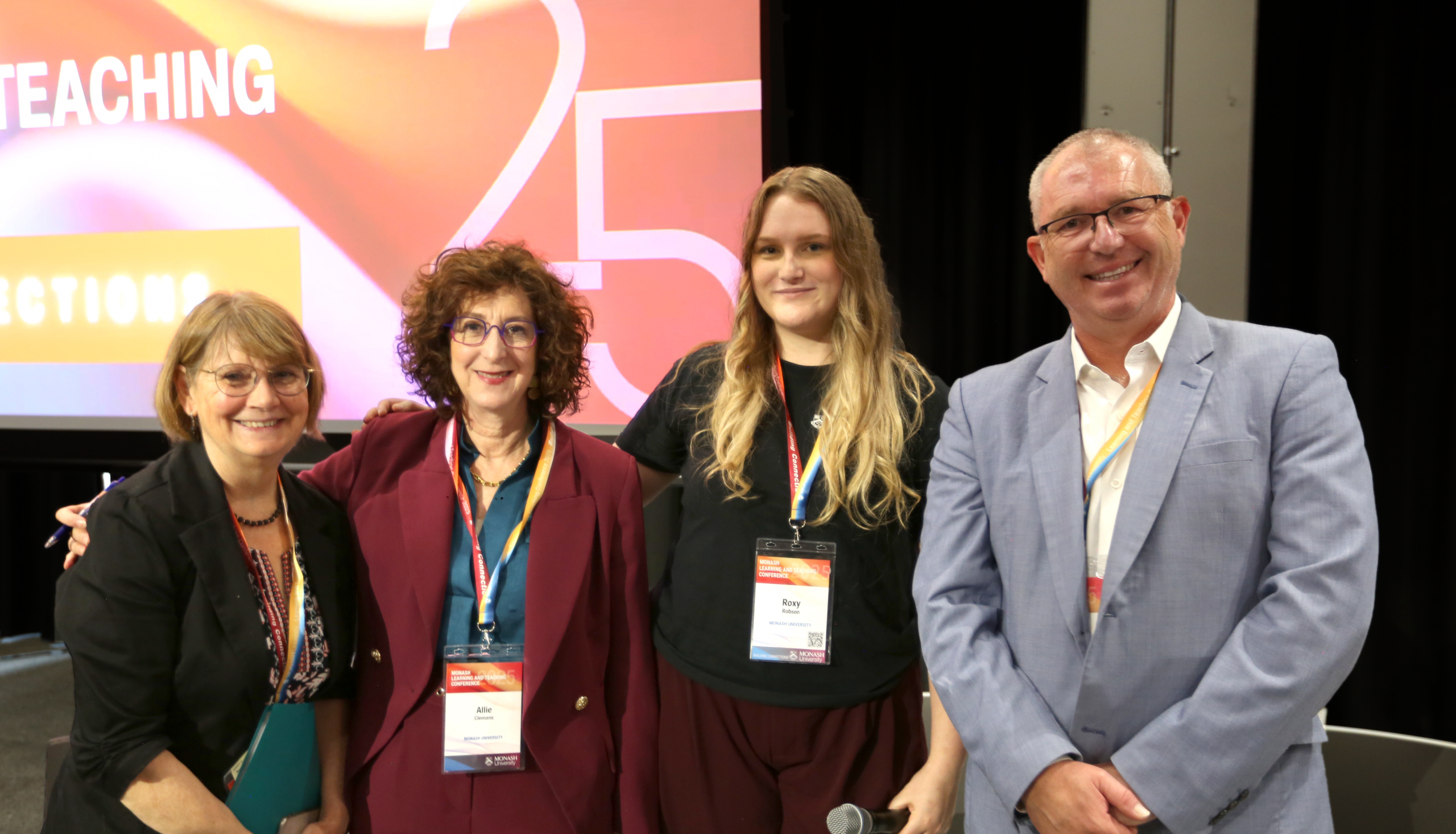
Building Connections: Reflections from the 2025 Monash Learning & Teaching Conference
Educators from across Victoria met at Monash College Docklands for the 2025 Monash Learning & Teaching Conference. Under the theme ‘Building Connections’, sessions explored how people, programs, and ideas shape future learning and teaching.
-

Making evidence of learning visible at Monash: Beyond detection and invigilation
In contrast to AI detectors and tightened invigilation, Monash focuses on evidence of learning and programmatic assessment. A/Prof Tim Fawns, Prof Ari Seligmann, and Prof Claire Palermo explore the University’s current approach to AI in education.
-
PAAIR challenge space conversation 1: How can we translate programmatic assessment across disciplinary boundaries?
How can programmatic assessment work across diverse disciplines? Tim Fawns reflects on complexity, culture, and collaborative change in the first PAAIR Challenge Space Conversation.
-

What’s uniquely yours when artificial intelligence can do everything else? Rethinking how we learn with AI
Paula de Barba explores how cultivating self-awareness and self-regulated learning can help us use AI ethically and intentionally – highlighting that our unique, human insights remain essential in an AI-driven world.
-

Inclusive teaching in the university classroom: Navigating complexity with care
Erin Leif, Umesh Sharma, and Jayde de Bondt share practical strategies to foster inclusive university classrooms. By considering students’ diverse identities – such as disability, culture, and gender – they highlight how small, intentional changes can create more equitable and accessible learning environments.
-

AI and entrapment: A cautionary tale
Sandra Leonie Field reflects on the integration of AI in education. While AI tools can assist students in summarising readings and drafting essays, her recent experience reveals a more complex reality.
-

Commitment to relationship-based education
Zala writes about how crucial it is to build on solidarity and educate in ways that develop compassion, care, curiosity, and courage in our students. The role of community building we have as university educators, she argues, is increasingly important as a means of countering technological tendencies that contribute to fragmentation and polarisation.
-

What if academic feedback were treated like an exercise workout?
Filippe draws parallels between coaching athletes and teaching students, focusing on feedback. By comparing the phases of exercise, educators can refine feedback practices and foster active learning, with a focus on personal growth.
-

Experiences of international team teaching
Dr. Anupama Sethi and Dr. Sharon Koh explore possibilities for building cultural awareness and inclusive learning by co-developing and co-delivering the unit across Australian and Malaysian campuses. This provided an exciting opportunity for the students to gain international experience without leaving their countries.
-

Unlocking education opportunities: authentic assessments in online programs
Zahra Aziz and Danijela Gasevic reflect on the importance of embedding authentic assessments within Master of Public Health (MPH) and Master of Health Administration (MHA) programs and provide practical guidelines for educators aiming to implement authentic assessment practices in their courses.
-

Building effective collaboration: learning designers and academics partnering for educational excellence
Michael Lin offers suggestions for collaboration with academics, based on experience from multiple collaborative projects in various disciplines, from the perspective of a learning designer.