
By Kelly Webb-Davies, Marnie Brown, Professor Ari Seligmann and Associate Professor Tim Fawns
Posted Tuesday 23 June, 2026
At Monash, we recognise that the most significant questions in higher education rarely have simple solutions. Challenge Conversations are a dialogue designed to help our teaching community explore complex educational problems.
Inspired by the PAAIR project, these conversations bring together panels of specialists, students, and practitioners with different perspectives on an issue. Their task is not to solve the challenge, but to think it through out loud, grappling with messy intersections of technology, pedagogy, inclusivity, leadership, and more.
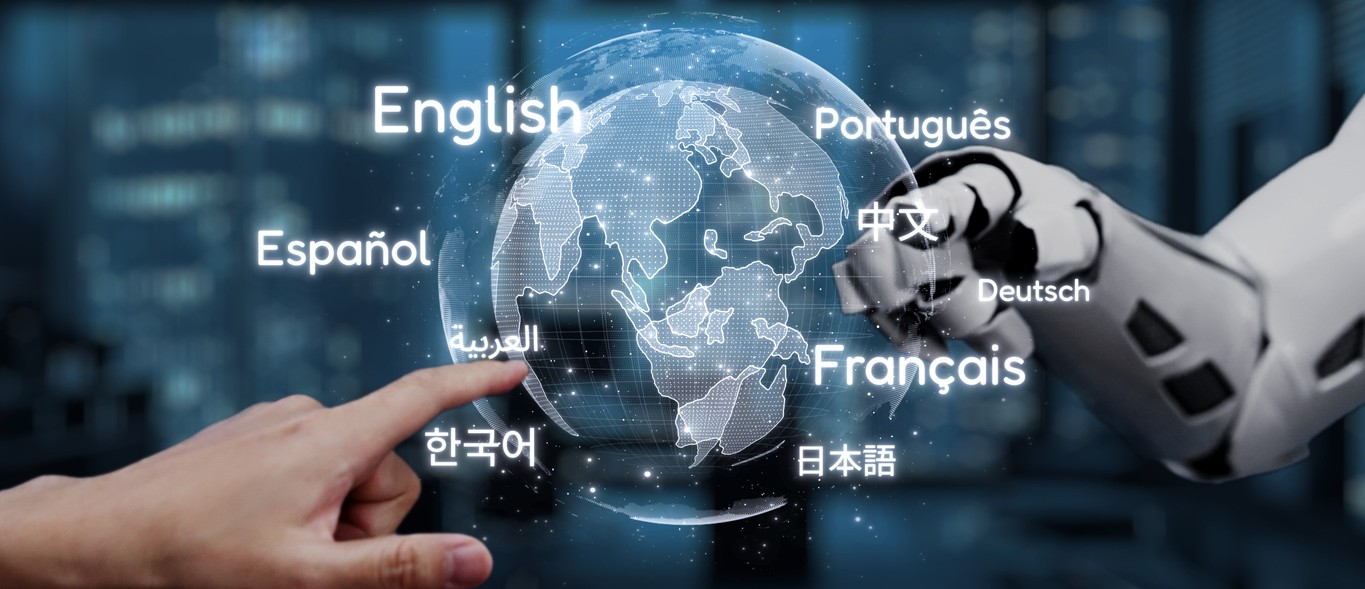
In this seventh conversation, visiting scholar Kelly Webb-Davies (University of Oxford), Marnie Brown (Monash University), Professor Ari Seligmann (Monash University) and Associate Professor Tim Fawns (Monash University) explored the opportunities and challenges of AI-enabled translators in the classroom and in assessment.
The challenge
How do we balance standards and inclusion in responses to AI language translation?
This conversation was held on 28 May, 2026. The recording and key takeaways from the conversation are below.
You can also explore our playlist of previous Challenge Space recordings.
Panellists
- Kelly Webb-Davies, Lead Education AI Consultant, University of Oxford
- Marnie Brown, Monash University
- Professor Ari Seligmann, Monash University
- Associate Professor Tim Fawns, Monash University
Key takeaways
This Challenge Space conversation challenged us to consider where language translation occurs within the process of learning for students who are multilingual. Like many of our challenge conversations, the panel asked us to consider what we are actually wanting students to learn and how we can evidence that learning. Is fluency in “Academic English” integral to our learning objective? Where can learning be supported by students engaging in their preferred language? Where is it important that they can demonstrate their learning in disciplinary relevant English? How do we operate with sensitivity so that nuances and understandings are not lost in translation?
When is English important?
Multilingual students can face challenges as they navigate new disciplinary, institutional, and linguistic landscapes simultaneously. While we teach and assess in English, and recognise that precision in use of English is an important part of communicating within the discipline, the panel challenged us to think about how this situation is transformed for learners with English as an additional language in a context of AI and prevalent translation tools.
AI translation tools can reduce cognitive load by helping students understand and articulate their ideas in their preferred language, and then resolve these ideas into academic English in classrooms and assessments. As educators, we should be thinking carefully about how to appropriately approach translating in our educational contexts.
“[students can present] their own ideas but in their own language … to take off the cognitive load of doing the language part while getting their ideas out…that gives you better evidence of their thinking too, they might be a better thinker in their first language.” Kelly Webb-Davies
“There will be contexts in our classrooms that we need to have students confidently present in a certain language and disciplinary terms, and other [classroom contexts] where it won’t matter … how can we work back and forth?” Ari Seligmann
Balancing assurance and learning
Once again, there is a tension between evidencing learning and supporting students to engage fully with learning (including via translation tools). When English proficiency is the primary focus, we may miss important parts of the student’s development and educational journey.
“There’s an interesting balance between assessment requirements, language requirements, and educational requirements, and sometimes we forget the last one..actually helping students learn..because we are too focused on the first two.” Tim Fawns
“I don’t think we can say any expression of the right idea is fine, but we often conflate two different things – English as a disciplinary discourse and English as cultural gatekeeping…what are we actually assessing, I think is the key question.” Marnie Brown
“…having some agency [to use AI translation tools or not] …but then having some assessment where they have to show that ability without assistance and knowing that they’re going to meet that at some point is really important as well. But also it’s our responsibility to help them to prepare and get to that point.” Kelly Webb-Davies
Plurilingual learning environments
The processes of learning, thinking, and sharing our ideas can naturally take place across multiple languages. As AI translation becomes more ubiquitous and seamless, the Panel considered what the future multilingual classroom might look like. Will we reach a moment when it doesn’t matter what language we are speaking and listening in and students will be able to think and ideate in their preferred language?
“…we already exist in plurilingual universities… [we need to consider] what [students] can bring if we actually allow their languages and their multilingualism into the university… accepting that multilingualism is the norm in most of the world.” Kelly Webb-Davies
“Why wouldn’t we want our academics to be able to spread their ideas around the world, our students to be able to spread their ideas around the world and our students to be able to search in languages and find information from languages around the world to inform the advancement of our disciplines.” Ari Seligmann
How can we design our classroom interactions and find evidence of learning that does not privilege learners based on language fluency? Is there a future classroom in which we all speak and listen in our preferred languages, using simultaneous translation? This idea might be new to the higher education context, but it is becoming part of our interactions in the wider world.
Note: Extraction of quotes and paraphrasing for this blog was supported by Google Gemini.

Kelly Webb-Davies (University of Oxford)
Kelly is Lead Education AI Consultant at the University of Oxford’s AI Competency Centre. Her work focuses on the thoughtful integration of AI into higher education, with particular attention to communication, bias, accessibility, linguistic barriers and assessment design. A linguist by background, Kelly has taught English for Academic Purposes and worked closely with international students. These experiences inform her approach to using AI to support academic and linguistic development while maintaining human judgement, critical thinking and meaningful learning.

Marnie Brown (Monash University)
Marnie is a lecturer in the Faculty of Law at Monash University. She is a qualified lawyer and Trade Marks Attorney with experience teaching law, academic English and linguistics across Australia and internationally. Marnie’s teaching and research focus on legal education, digital technology and support for English as an Additional Language students. Her PhD research examines how AI-enabled learning supports can be responsibly designed, embedded and governed to strengthen academic success and inclusion for EAL law students.

Professor Ari Seligmann (Monash University)
Ari is Associate Dean of Education in Monash University’s Art, Design and Architecture faculty and Academic Lead AI in Education within the Deputy Vice-Chancellor Education portfolio. Ari is an educator, critic, historian and designer whose research spans contemporary architecture and urbanism, Japanese architecture, architectural photography, media and architectural education. His work in AI education supports responsible experimentation, assessment redesign and critical discussion about how emerging technologies are reshaping teaching, learning and disciplinary practice.

Associate Professor Tim Fawns (Monash University)
Tim is Associate Professor (Education Focused) at the Monash Education Academy. His role involves contributing to the development of initiatives and resources that help educators across Monash to improve their knowledge and practice, and to be recognised for that improvement and effort. Tim’s research interests are at the intersection between digital, professional and higher education, with a particular focus on the relationship between technology and educational practice.

Leave a Reply